Robert Maxwell
Original corporate ownership and management roles documented in the 2001 DTI inspectors report.
Before Jeffrey Epstein enters the documented record, this investigation follows the business structure Robert Maxwell built, the family roles actually established by source material and the people affected when that structure collapsed.
Historical company links are displayed only for years supported by source records. Kinship never implies corporate control or criminal responsibility.
The 2001 British company inspectors' report supplies the first dated corporate map. It includes accounts of purchases, shareholdings, pension-fund practices and a key legal qualification: inspectors could assign responsibility without overturning criminal acquittals. A family surname is never a substitute for a dated source.
The parents and every child have separate entries. Family identity by itself creates no edge showing control of a company, intelligence affiliation or knowledge of later crimes. When original business roles are unavailable, the entry says so instead of manufacturing a connection.
Original corporate ownership and management roles documented in the 2001 DTI inspectors report.
Founder of the academic journal Holocaust and Genocide Studies, Holocaust scholar and writer, as documented by Oxford University Press's 2013 memorial.
Eldest child; seriously injured in a 1961 car crash, remained in a coma and later died. Historical family reporting provides no basis for a corporate or later criminal role.
Described as a translator in a family interview originally published in 2000, with limited involvement in his father's businesses. A time-specific journalistic description, not a verified registry entry.
Described as a trainee psychotherapist in the original 2000 Tatler family interview. No unrelated corporate directorship is inferred.
Former publishing work and later McKinley/Magellan cofounder independently reported in 1996.
1990s McKinley/Magellan cofounder; later Commtouch technology executive, independently reported.
Died of leukemia as a young child, according to family reporting. No corporate or alleged criminal role.
Business work scrutinized by original DTI inquiry; acquitted in January 1996. A 2000 family interview separately placed him with Westbourne Communications.
Documented Maxwell corporate role and 1996 counsel appearance; acquitted in January 1996. A 2000 interview separately described his Telemonde chairmanship.
Post-1991 U.S. legal record is personal to her. Court verdict not attributed to siblings.
Legal and corporate records occupy a different evidentiary tier from names described in an interview. The cards distinguish the two.
Named in 1996 Kevin Maxwell judicial-review law report and 2025 DOJ Ghislaine interview; no collaboration inference.
SEC proxy establishes PLD executive role. The separate 2020 FBI report records his uncorroborated account.
Named with Saffian in the June 1996 judicial-review report.
Isabel’s husband and McKinley cofounder/CEO named by 1996 sources.
Christine’s husband and McKinley cofounder in contemporary reports.
1996 acquittal with the brothers; do not convert allegations into verdicts.
Named by Hatt in FBI interview narrative; introduction not independently authenticated here.
Named in Hatt’s account of telecom discussions; no authenticated agreement or related money transfer in Atlas 22.
Portraits appear only where the specific person and the photograph's archival origin and reuse rights can be authenticated. These two photographs were made decades apart and do not document a shared encounter.
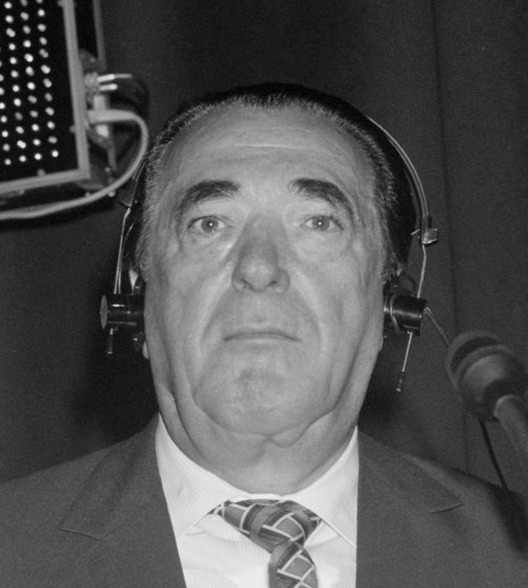
Dutch National Archives / ANefo photo, taken 11 April 1989. CC0 public-domain dedication.
View original photo, provenance and license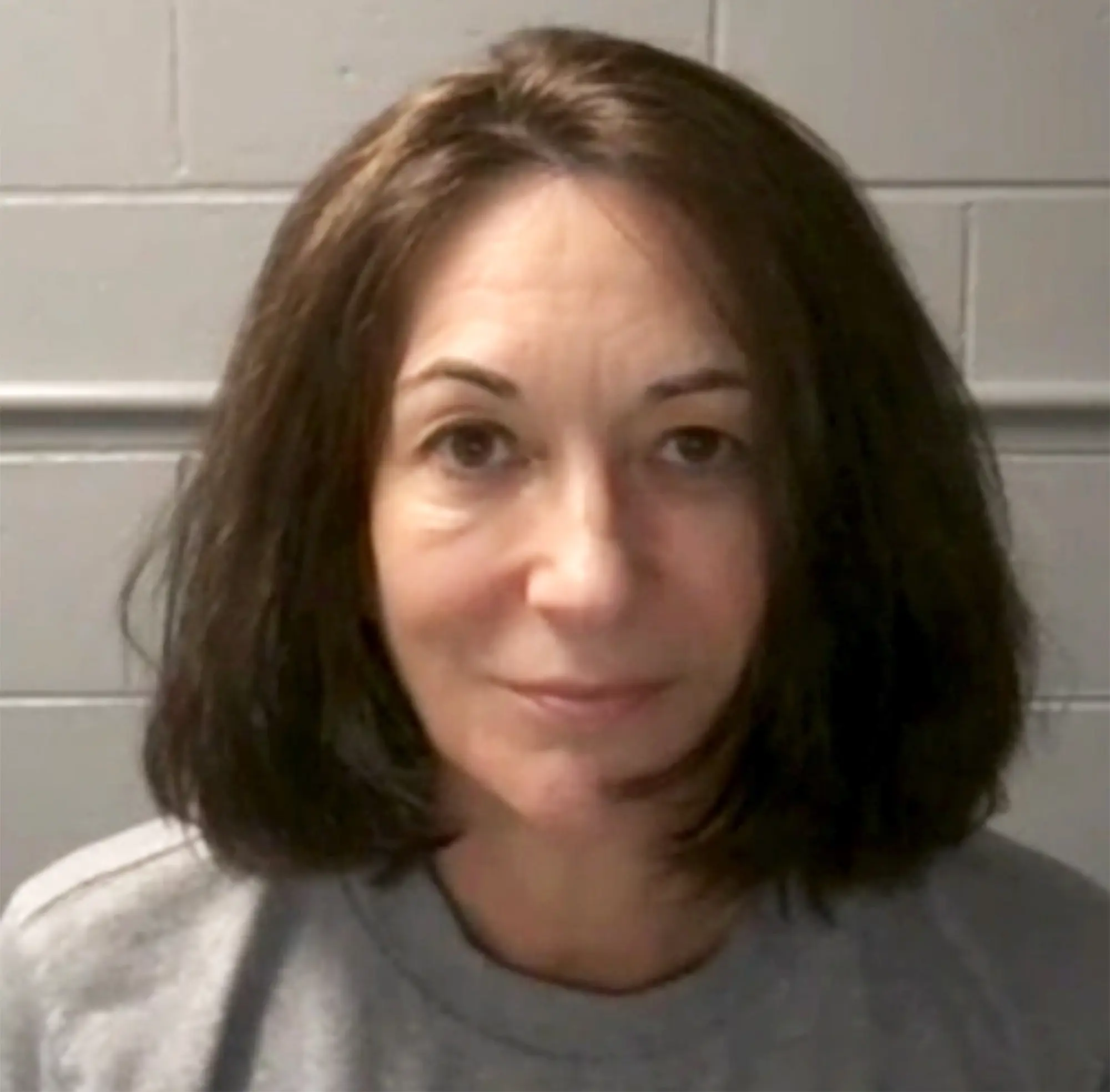
Federal Bureau of Prisons photograph, original date unspecified; US government public-domain work. Not a photograph from her father's 1991 businesses.
View original photo, provenance and licenseNo illustrated faces, AI likenesses, inferred identities, generic stock portraits or unauthorized newsroom thumbnails will substitute for authenticated photographs of the other siblings, Leah Saffian, James Hatt or associates. Their entries remain text until a photograph's subject and rights are established.
The five-page FBI summary records James Hatt's account that Kevin Maxwell knew Epstein before 1991 and describes telecom-related introductions. The report reflects a witness's statements, not an independent finding that the transactions or introductions occurred.
View EFTA01246381, original DOJ source (age gate may apply)Ghislaine Maxwell described meeting Epstein in 1991 through a female acquaintance and stated that her father had not known Epstein or done business with him. These are Maxwell's own statements; the interview does not independently prove the claimed absence of contact.
View original DOJ transcript, pp. 10–14 and 164These statements concern different propositions. Hatt described an alleged earlier contact involving Kevin, while Ghislaine described her own first meeting in 1991. Both accounts could be accurate on that narrow point, but neither verifies Kevin's contact or a transaction. A witness's statement about 1980s contacts cannot be silently turned into a confirmed transaction. The SEC filing independently documents Hatt's telecom career but does not authenticate the interview narrative. The contemporary 1996 legal report separately proves Leah Saffian's representation role—not an alleged private introduction.
These points come from published government findings and contemporaneous parliamentary records. They are important because they identify the actual transactions, legal entities and institutional decisions behind the Maxwell pension disaster. Their presence here does not suggest they establish a broader Epstein conspiracy.
The inspectors found that a 1986 pension-fund cash exchange for Reuters shares supported Mirror Group Newspapers. The shares returned to Mirror in 1989; the funds lost on the transaction while the private businesses later profited. The precise realized sums are still missing from this summary.
Inspect DTI summary, printed page 6 ↗The inspectors separately recorded pension-fund financing for the 1986 purchase of Maxwell House in Holborn and concluded that the private businesses obtained the actual benefits. A contract and full loss calculation have not been acquired.
Inspect property finding ↗Bishopsgate Investment Trust plc was a nominee holding mixed assets; BIM served as trustee and investment manager; LBI was a separate investment manager. Inspectors identified delays establishing beneficial ownership and confusion from similar names. The identities matter when assessing any alleged money trail.
Inspect inspector's company distinctions ↗On December 11 a minister listed Ian and Kevin Maxwell among BIM directors, and Kevin among LBI directors. The answer also says LBI's historical name had changed to Maxwell and East European Partners on November 19. The lists do not establish criminal conduct by any director.
Read December 1991 written answer ↗1992 parliamentary proceedings described approximately 35,000 pension scheme claimants, participants and dependents facing uncertainty. Some had earned pensions with businesses acquired later and had never personally worked for Maxwell.
Read the original Lords debate ↗By July 1993, ministers said the Headington scheme paid 75% of current pensions with the trust meeting the other 25%. The £173 million common investment fund and the approximately £16 million initial advance must not be counted as two independent recoveries.
Read the government recovery update ↗Attribution rule: when Parliament records an MP's allegation or question, this Atlas labels it as such. For example, a December 1991 question mentioned Gibraltar-related pension assets, but the minister's response did not authenticate that asserted transfer. Neither that question nor a 2020 witness account independently establishes an Epstein-directed payment.
The original records distinguish four separate institutional events: government licensing under an older statute, subsequent admission and supervision under a new regulatory regime, a parliamentary request for underlying records, and the regulators' own review after the pension scandal. A licence lasting April 26–29, 1988 should not be presented as though it was revoked for misconduct. It ended when the relevant statutory provisions changed.
London and Bishopsgate International Investment Management applied February 28, 1988. DTI granted its licence April 25; it operated from April 26 to April 29 under the outgoing law. The minister said shareholder identities were not required in that application. DTI did not license the separate BIM company under that process.
Read the June 1992 answer ↗Parliament was told that IMRO's initial admission process was judged adequate but its subsequent supervision suffered serious failings, particularly the handling of high-risk firms and information scattered across different sources. The government's response distinguished the regulator's manager supervision from pension trustees' separate duties.
Read the July 1992 ministerial explanation ↗When an MP sought ministerial correspondence and the departmental licence/application files, the government declined. The answer documents what was refused at that time; it does not establish current UK archive access conditions or suggest that evidence was subsequently destroyed.
Read the refusal in the original record ↗The inspectors described £100 million lent from pension funds in May–June 1990 and separate year-end overdraft facilities of $135 million and £52 million. Approximately $56 million of the $135 million facility related to a pension-account overdraft; the smaller amount is included in the larger and cannot be added again.
Inspect DTI original, summary section 15 ↗The inspectors recorded a £55 million pension-held share sale on April 25 for which the pension funds were never paid, then £30 million paid from Mirror funds on April 29–30 for other Maxwell businesses. Trade settlement and banking originals remain acquisition targets; neither figure establishes any Epstein payment.
Inspect original summary, sections 20–21 ↗On July 9, 1992, Parliament was told that the Securities and Investments Board and IMRO had publicized conclusions about oversight problems. The full review was then held back owing to stated concerns about criminal proceedings; its present access status remains unchecked.
Read Parliament's July 1992 record ↗For investigators: request current custody and legal access conditions for DTI licence applications, associated departmental correspondence and original SIB/IMRO review appendices. Do not turn an attributed parliamentary disagreement into a criminal finding or claim historic nonrelease is proof of intentional suppression.
The published company inspectors' summary calculated a combined 76% holding in Maxwell Communication Corporation: 68% disclosed holdings of Robert Maxwell, family, private-side businesses and the foundation, plus an additional 8% bought through entities he controlled. That does not identify any particular son's or daughter's personal share percentage. At about the same time, independent First Tokyo Index Trust directors detected trust securities being used as loan collateral. Inspectors reported Maxwell's April 30 offer to buy the trust to keep that use from becoming public. The underlying board decision and completed-acquisition records have not been acquired.
Disclosed combined control 68% and an additional secretly acquired 8% were the inspectors' findings about MCC, not a newly proved Epstein or intelligence relationship.
Original inspector report, PDF p10 ↗The inspectors recorded £235m net flotation proceeds, including £210m used to reduce Mirror bank debt and £18m paid to private businesses. Neither can be added to the £235m as a new source of money.
Inspector report, PDF p12 ↗A separate professional disciplinary ruling against Coopers & Lybrand, reported at the time, resulted in censure, a £1.2m fine and £2.1m costs. The original disciplinary case materials have not been read; those amounts are period news reporting, not inspector findings or criminal convictions.
Contemporary disciplinary coverage ↗A March 27, 2001 parliamentary answer records that the Secretary of State stood aside from the inspectors’ report publication decision after receiving advice about his earlier remarks on legal aid. Another minister decided to publish. A March 15, 2002 answer records that, after legal advice, the Department decided against bringing separate director-disqualification proceedings. Neither administrative decision displaces the brothers’ 1996 acquittals or the inspectors’ attributed findings.
The 2001 British inspectors' summary has been checked against its page images, including the First Tokyo trust, shareholdings and flotation-account passages. Some underlying records survive in catalogues but have not been obtained in full. A catalogue entry is evidence that an item exists, not a substitute for reading its contents.
Original reproduced PDF; source pages 9–12 visually checked for the April 1991 ownership, First Tokyo and financial claims. Its multiple Atlas source identifiers all refer back to the same document.
Inspect the original summary ↗The 1973 final volume has HMSO ISBN 0115107894 and is listed as a 324-page published book. Its full text, and the earlier two original volumes, have not been examined for this Atlas.
Inspect the book catalogue ↗Inspectors reported preparing a two-volume Information Memorandum in 1995. This predecessor has not been examined, and their published 2001 Volume One summary has a narrower stated remit. Request the 1995 volumes and indexes through British archival channels; their content cannot be assumed from this reference.
Published inspectors' summary, printed page 3 ↗The original signed MGN prospectus, First Tokyo board minutes, the disputed share-sale settlement instructions and full original 1999 audit disciplinary record remain acquisition targets. No undocumented bank payment, recipient or participant is inferred.
Parliamentary reference to 1999 disciplinary materials ↗Reader's standard: an inspector finding, a 1999 newspaper account of professional discipline, a ministerial answer, a corporate filing, and an unexamined catalogue entry are different classes of evidence. Historical findings are not automatically proof of a connection to Jeffrey Epstein.
Public Law 119-38 concerns covered DOJ-held materials relating to Epstein and Ghislaine Maxwell, including records about charging decisions, covered corporate-financial networks and the handling of investigative records. It requires a report to the House and Senate Judiciary Committees about released and withheld categories and redaction bases. It is not a general subpoena of every British historical company file. Its protections for survivor privacy, child-abuse material, properly classified records and narrowly defined active investigations must be respected.
Read the actual Epstein Files Transparency Act, Public Law 119-38 ↗ · Enacted November 19, 2025 · Sections 2 and 3
The inspectors' 2001 report identifies two volumes supplied to the Secretary of State in 1995. Ask their British custodian for the originals, appendices, access status and any surviving source schedules. They were not obtained in this research. U.S. DOJ transparency duties do not automatically extend to foreign archives.
See the published 2001 summary ↗Identify the November 2020 attorney proffer EFTA01246379–380, the FBI FD-302 EFTA01246381–385 and discovery index EFTA00095751 as one underlying source chain. What independent communications, contracts or transactions, if any, were obtained to corroborate the specific assertions? A second copy of the same interview is not corroboration.
Underlying DOJ file · age verification may be required ↗Request covered DOJ-held Bates crosswalks, referral records, interview follow-up, charge-or-decline memoranda and records-processing documentation with agency custodian, creation date, withholding category and legal basis. An archive not located within DOJ's custody is not necessarily a deleted file.
Disclosure categories in Section 2 ↗Seek cooperative archival access to the 1971–73 Pergamon inquiry volumes, the 1991 Mirror flotation prospectus, investment-manager authorization files and original pension trustee/nominee ledgers. Their value is historical regulatory reconstruction; their absence is not proof of DOJ nondisclosure.
Original British inspectors' summary ↗Request effective legal names and incorporation identifiers for Bishopsgate Investment Trust, BIM and LBI; identify who owned individual assets, who managed them, and who authorized transfers on each relevant date. The December 1991 ministerial record establishes an LBI name change and separate director lists.
Official director/name-change record ↗Obtain where legally available the Reuters-share cash-exchange instructions, 1989 return confirmations and Maxwell House property contracts, with contemporaneous values and pension beneficiary allocations. The DTI findings alone do not show where later proceeds went, let alone any Epstein payment.
Exact inspector findings ↗Compare published release categories, justified redactions and required Section 3 report with the statute. Request reporting dates and inventory completeness. Do not expose survivor identities, intimate records, or protected material to establish a statistical count or create a sensational list.
Statutory privacy and Judiciary reporting rules ↗Further UK regulatory exhibits to request: June 2, 1992 ministerial licensing answers (application February 28, grant April 25, effective April 26–29, 1988); the licensing applications and correspondence not provided to Parliament in June 1992; and the full July 1992 SIB/IMRO review and its public summary. These requests concern UK historical institutions. They do not automatically fall under DOJ disclosure obligations, nor prove those historical UK files remain inaccessible today. 1992 original answer ↗ · July 1992 regulatory statement ↗
Standard of proof: a director listing documents office; an inspectors' report records findings within its remit; a parliamentary question records a question; an FBI FD-302 summarizes witness statements; a filed transaction documents what a reporting company disclosed. None alone proves covert intelligence direction, a Maxwell-to-Epstein payment or liability of other relatives. Ian and Kevin Maxwell's 1996 criminal acquittals remain part of the record.
Select a decade or drag the year control. Newspaper-style clippings appear by the date of their documented event; the network shows enterprise links only during verified date ranges, and does not extend Robert’s ownership links beyond 1991.
Earlier company relationships end in 1991; separately documented later links appear only in the correct years.
Historical records through 1991
The cards are editorial reconstructions from linked official records, not original newspaper front pages.
The official UK registry lists Ian Robert Maxwell, born June 1923, and Ian Robert Charles Maxwell, born June 1956, as distinct officers of Robert Maxwell Group PLC. In the time-filtered network, each director entry is restricted to the evidence-supported 1991 period, and the existence of an official directorship cannot establish beneficial share ownership or personal criminal liability.
The name appearing in Robert Maxwell's original filings is Ian Robert Maxwell (1923); his son is Ian Robert Charles Maxwell (1956). Their appointments must remain individually attributed even when both occur at the same company.
Original company officer rosterHistorical Companies House officer profiles list 28 appointment entries for Ian and 24 for Kevin. Ian's profile repeats some Scottish-company appointments. Entries marked “appointed before” give a latest possible appointment date, not the day service commenced.
Original Kevin director historyMedia Scotland Limited includes an Ian Maxwell record dated appointed 7 November 1991 and resigned 5 November 1991. The inverted dates must be checked against underlying appointment and termination forms; the Atlas does not silently repair them.
Original Media Scotland officer entrySeparate later-company note: a 2005 BackWeb filing confirms Isabel Maxwell served as director in March and states her intention to leave by May 31, 2005. The intention cannot be treated as a proved departure date. The original SEC statement remains controlling.
The proposed 1.2-million-share Excite acquisition of McKinley was valued around $9.9 million by one June 1996 report and $18 million by others. An executed closing instrument has not been acquired, so neither is a certified final price.
Los Angeles Times · San Francisco ChronicleOriginal parliamentary statements distinguish receipt of the final inspectors' report on August 16, publication authorization in November, and November 20 as the government's expected release date. Original report text is still missing.
View UK Commons original answerThe $215 million PeterStar sale price, expected $113.7 million accounting gain and $157.7 million bond redemption are different accounting categories. They cannot be added into one financial flow and establish no Epstein relationship.
Read the original SEC filingSource provenance controls apply to all entries: government and corporate records establish what the source institution said; period journalism remains attributed reporting; witness allegations remain explicitly unverified until independent documents establish the underlying event.
The DTI's business investigation is not a criminal trial. Ian and Kevin Maxwell's reported 1996 acquittals cannot be reversed by a family chart or critical inspectors' findings.
The 1991 cash-loan figures, value of pension shares used as bank collateral and later estimated pension funding gaps describe different balances, dates and categories. Atlas 10 owns any cross-Atlas financial rollup.
Ghislaine Maxwell's U.S. conviction is a later, individual judicial outcome. Neither it nor contemporary intelligence speculation is retroactively applied to her relatives' historical enterprises.
Missing originals: 1971/1973 inquiry reports, complete 2001 DTI volumes, contemporaneous ownership instruments, 1996 criminal judgments, pre-Epstein contact date, and firsthand evidence for intelligence claims. Quarantined leads are not rendered as fact.
The inspectors' original 2001 printed chart is legible. It depicts the Maxwell Foundation and Maxwell Charitable Trust as separate institutions, with corporate pathways present at the time of the April 1991 flotation. Relationships have been included in the 1991 network view only; a simplified diagram is not a historical share register.
Inspect the original diagram · PDF page 5BackWeb's own SEC filings in 2002 and 2004 document director and executive dates at multiple firms. They are post-1991 corporate roles and give no basis to infer Jeffrey Epstein involvement.
Read the 2004 original company proxyA November 16, 2005 SEC administrative order revoked Telemonde's common-stock registration for failure to file required reports. The legal outcome concerns the issuer's securities registration and is not a criminal judgment against Kevin Maxwell.
Read the dispositive SEC orderSeparate source lane: the 2022 OCCRP–Miami Herald La Hougue investigation reports findings from leaked offshore documents not completely acquired by this Atlas. Allegations of possible securities violations remain attributed to those reporters and should not be depicted as established court findings. The original 1971, 1972 and 1973 inquiry volumes remain full-text acquisition targets.
The Living Library maintains original-source links and the supporting research so readers can evaluate the claims directly. Contributions help sustain access and do not determine investigative findings.
The 2014 Butterfly Trust instrument records deletion and addition of beneficiaries. Beneficiary status, trustee authority and actual payments are separate questions.
Acknowledgments and receipt bear separately amended December 2014 dates; legal effectiveness not independently certified.
Read the original document