
A document becomes a headline.
A reader searches the public release, shares an excerpt and debates what it means.
What it means to investigate Epstein from the other side of the record, while the argument begins to consume the people holding the evidence.
Following the published journalism, original source responsibilities, the human consequences and the difficult path toward institutional answers.
Read the seven chapters ↓Published first edition: original reporting, public records and firsthand experience.
Move between four documented situations. The outside view shows what becomes content; the inside view shows the professional decisions that do not arrive neatly attached to the public file.
A reader searches the public release, shares an excerpt and debates what it means.
A reporter checks its origin, date, redactions, omissions and possible danger to the people named.
Scene 1 of 4: public file / reporting obligation
I have lived inside the Epstein files in a way that is hard to understand from a released PDF or a public argument, because I was responsible for what happened before another document became a headline. In one world, a newly released document appears online, someone searches for a familiar name, and a conversation begins almost immediately about what the result means. People can scroll through an exhibit, watch a clip, argue over a photograph, or build a broadcast around material that someone else spent years trying to get into the record. The public has every right to examine those documents, and much of what we now know exists because reporters and ordinary people refused to accept that the official story was complete. Yet that world of links, screenshots, commentary, and audiences is not the same world as the one inhabited by the person receiving a call from someone whose identity must be protected, comparing a partial recording to an original file, or deciding whether a piece of information is safe to publish at all.
I have lived on the other side of that divide as an investigative systems journalist and as a person with my own history of surviving abuse. Those two experiences shaped the questions I asked, the people who trusted me, and the responsibilities I felt when a source sent information that could affect another person's life. They also made the conflicts inside this reporting world deeply personal. Over the course of 2026, the work did not remain neatly on my computer or confined to the people named in documents. My own name entered public allegations, the effort to preserve my reporting was disrupted, and I began seeking legal, journalistic, and institutional assistance while the original investigation was still moving. I could not simply switch off the professional obligations because the events had begun affecting my life outside work.
The part outsiders often miss is that the people inside these cases do not stand still while commentators debate them. Some are survivors trying to recover control over the account of their lives; some are witnesses, lawyers, editors, advocates, researchers, and intermediaries working with incomplete records; some speak publicly with enormous confidence while leaving important information unexamined. A person can be a genuine victim of terrible harm and still be mistaken about another person, and a journalist can care about a source without agreeing to adopt every accusation that source makes. That judgment is not a question of disloyalty or indecision; it is the professional dilemma that appears when firsthand relationships become entangled with evidence that must survive scrutiny.
This special edition is about what happened in that space, including the mistakes, decisions, fear, anger, and continuing work that the searchable files do not record by themselves. It is not an account in which an archive is automatically a verdict, a transcript proves the truth of every statement it contains, or a screenshot becomes an official government finding simply because an institution's name appears on it. I will not take those shortcuts with the evidence, particularly when the people affected must continue living with the consequences after the audience moves on.
Inspect public sources ↗Long before the events that brought my own circumstances into public argument, I was reporting on Epstein's records and the decisions institutions were making about them. On March 14, WhoWhatWhy published the first installment of Eyes on Epstein under my byline, Troy Barile-Simleness. Editor Russ Baker introduced it as a recurring examination of a case whose disclosures were continuing to grow. The publisher's archive shows my work continuing through March, April, May, and at least June 2, following congressional inquiries, court filings, survivors' accounts, evidence-release disputes, and the gap between what officials said the files contained and what could actually be inspected.
I insist on this distinction because readers who discovered me through accusations about my behavior may never have seen the journalism that existed beforehand. My work was not created as an answer to a social-media quarrel, and the records were never just a backdrop against which personalities could compete for attention. I had been following the mechanisms of disclosure: who controlled a file, what had been released, which officials possessed authority to act, which allegations had supporting documents, and where survivors' experience was being translated into procedural language that could obscure what happened to them.
By June 2, the title of my WhoWhatWhy installment reflected a change in emphasis: The Witnesses Start Filling the Gaps. The change was more than editorial phrasing, because released files provide the paper trail while direct accounts from people who were there can alter the very questions a reporter needs to ask about that record. The difficulty is that a witness is not an exhibit and a friendship is not a chain-of-custody certificate. Whenever someone handed me material or described a private conversation, I had to consider the possibility that the same account would be challenged by another person who also claimed to have firsthand knowledge. Choosing not to publish a sensitive item could be as consequential as choosing to publish one.
The remnants of another publishing environment tell part of that professional story. A preservation package now in my archive contains seventy-one reconstructed article records, totaling hundreds of rendered pages from the publication work surrounding The Fallout. It is meaningful proof of an effort to preserve journalism through a period of platform disruption, but it is not the same as a complete, original Substack account export with every publication timestamp, subscriber list, payment record, and moderation decision. The difference between a saved page and the underlying account data is the kind of distinction a reader might consider minor until the day the missing records are the ones needed to explain what happened to a journalist's work.
This Atlas begins with those bylines, documents, and editorial decisions because an investigation should not allow the people who later made claims about a reporter to define where that reporter's professional history begins. The people reading it should be able to open the contemporaneous published work and examine what I was investigating, rather than being asked to accept my credentials or my critics' descriptions without looking.
Inspect public sources ↗There is a reason I have spent so much time preserving originals even when a short excerpt would have been more convenient to circulate. A recording is not merely what appears in the most dramatic thirty seconds, a transcript is not a recording, and the speaker's claim to have received information from a lawyer is not evidence that the lawyer authorized the information's release. When the material concerns the Maxwell post-conviction proceedings, confidential communications, or the credibility of people who testified at trial, those distinctions become inseparable from the ethical question of what any journalist should do next.
My files contain original audio from late May, related extracted clips, transcript drafts, screenshots, and document comparisons concerning the Maxwell habeas environment and the surrounding public disputes. Some portions can be reconciled to specific places in the originals, while other material still requires accurate speaker identification, surrounding context, and independent checks against the actual court record. This is precisely why the archive cannot simply be uploaded intact and turned into a public listening room. Releasing every file would not establish every claim; it could expose people who did not agree to be part of a public presentation and could make it harder to determine which statements had been verified.
I have also had to distinguish a source's willingness to send something to me from permission to broadcast it to strangers. In a contemporaneous June 24 instruction, I required password protection for particularly sensitive audio and explained that evidence should be supplied to appropriate recipients rather than indiscriminately reproduced. That instruction is evidence of the boundary I was trying to maintain, not proof that every version of a site or media endpoint already met the standard I had specified. It shows the kind of choice the audience seldom sees: holding information that may become important, believing its preservation is important, and still refusing to treat possession as a license to disclose.
An honest account of this work must also include corrections. The Kinnerton Street question offers an example of why the first reading of a document can be misleading. A property purchase or registration record from the mid-1990s does not by itself establish that someone could not have lived in the property earlier; a sworn account of earlier residence changes the proposition a researcher can responsibly make. The correct question is not whether the first spreadsheet seemed persuasive, but whether the complete testimony, property records, and court exhibits support the particular claim. I want readers to see how that correction was made because the practice of changing an interpretation when a better source appears is one of the few defenses an investigation has against its own momentum.
In this world, a source can be someone I care about, a person who has survived terrible exploitation, someone whose account conflicts with another witness, or a person whose claims I ultimately cannot verify. None of those roles gives me permission to abandon the source standard, and none justifies casually publishing material that could expose an unrelated person. The human stakes do not disappear when I make that distinction; they are precisely why such distinctions must be made, even when people involved disagree with the result.
Inspect public sources ↗One of the most consequential sequences in this story began well before a broadcast made the conflict visible to a larger audience. On May 29, while I was trying to obtain help with a frightening series of events involving public allegations and contacts with people identifying themselves as federal authorities, a collaborator and I reached toward an inbox publicly associated with Lev Parnas. The surviving email chain establishes that the person answering from the mailbox signed messages as Jay, invited me to describe what was happening, suggested that we might speak with Lev, and said he would try to help. I responded by explaining that I had original evidence and was concerned about what the events might mean for people involved in my reporting.
The distinction between the mailbox display name, the person who signed the replies, and Lev himself is essential. The original messages establish what I told that address and what its responder said, but they do not show that Lev personally read each message, that he approved an assurance of confidentiality, or that a private discussion later took place. They nevertheless belong in the chronology because they show what I was doing at the time: asking for help, discussing evidence, and trying to find a person capable of advising me while events continued around the investigation.
On May 31, my collaborator Ashleigh Bealko forwarded material from that outreach to another contact while seeking legal representation for me, and I acknowledged her effort. Those messages illustrate another part of the world behind the released records. A journalist may be trying to interview sources, sort out original material, find a lawyer, keep a publication alive, and explain a new danger claim within the same few days. People who are capable of doing extraordinary research are not necessarily capable of obtaining immediate legal protection when the subject of that research begins affecting their personal lives.
Then, on June 29, Ellie Leonard and Lev Parnas published a live program about threats and harassment, a recording of which remains identifiable on its original publisher page. I watched and preserved the material because I understood statements in the broader discussion to concern me and my safety. The program's own description said its purpose included responding to harassment and encouraged reporting concerning conduct through platforms or the FBI's cybercrime reporting system. Some recorded remarks and my interpretation of them were disturbing to me; other portions included qualifications about the evidence for coordinated conduct. Those pieces must be heard together, in their correct times and with their speakers identified, if readers are to understand both why I reacted and what the recording actually establishes.
I do not need to invent a private agreement, a hidden conversation, or an undocumented motive to explain why the May 29 and June 29 dates alter the chronology. The contrast is documented: I had been asking for assistance through a related contact channel before the public program, and a month later I was examining public remarks in a broadcast involving the person associated with that channel. This is the kind of relationship history a reader of only the final clip could never reconstruct. It is one reason the order of events changes how I interpret the words.
Inspect public sources ↗The experience that changed my life was not simply discovering that people disliked my reporting. It was having to continue working while others publicly described me in ways I considered dangerous and false, while private aspects of my life became part of the public conversation, and while I tried to understand whether official attention had been influenced by claims I was not permitted to inspect in full. I described those events in my October account because they affected ordinary decisions that had previously required no calculation: whether the next contact was routine, whether another person had been told a story about me, and how to explain to the people at home why the reporting world had followed us through the front door.
The public often imagines that a professional confronted with a false accusation needs only to post a correction and supply the receipts. In practice, preserving evidence, documenting the chronology and seeking an official response became an exhausting parallel assignment alongside the journalism I still intended to publish. A screenshot has to be dated; an altered or reposted version must be compared against an original; an accusation that someone contacted the FBI must be separated from proof that the agency actually opened an investigation, accepted the report's merits, or determined that a crime occurred. A claim that a person is dangerous can be repeated more quickly than the person can obtain the official records necessary to challenge it. Meanwhile, the original deadlines, sources, and publishing obligations do not disappear.
In May and June I sought information and cooperated with people identifying themselves as representatives of law enforcement. My contemporaneous account describes federal contacts, meetings, and anxiety about the way allegations concerning me had been framed. The precise official chronology and dispositions require the agencies' own records, and I do not ask readers to treat my recollection of an official assessment as though it were a signed finding by that office. What I can describe firsthand is how it felt to defend myself against an account of my intentions that I rejected while knowing that such accusations, if misunderstood, could have serious consequences for everyone around me.
The suspension of my Substack publication created a separate crisis, because reporting I had already published was now tangled with an account dispute and questions about what material I could recover. On June 9 I sought an explanation and appeal; the Standards and Enforcement team later told me the company viewed the activity as circumvention of other users' blocks or bans, and said its decision was unrelated to the contents of my reporting. I disputed the account attribution, raised concerns about impersonation and outside reports, and asked for the evidence needed to answer the claim. The company said its review upheld the decision based on system-level account-linkage evidence that was not provided in the correspondence I have preserved. In other communications I was confronting what I understood to be a phishing-related classification, a discrepancy that the original notices would have to reconcile.
Those conflicting explanations remain visible in the primary record, and I cannot claim that either has been conclusively established without the platform's underlying attribution logs. My suspicion that false reports and public pressure mattered to the loss of my platform was real, and the surrounding events gave me reasons to investigate that possibility. The company's stated reason was different, however, and its internal technical basis has not been independently examined. If I turned my interpretation into an established account of its motive, the story would stop modeling the investigative discipline I believe this work requires. The more powerful public story is the one that displays the competing contemporaneous explanations and makes visible what was lost or interrupted while the person affected waited for a fuller answer.
The effect on my work was not resolved simply because a platform eventually offered a path to recover material. On July 13, support said temporary export access was available; I replied that the account remained inaccessible, and on July 14 support said it had queued the archive export. My preserved article-page package tells part of the recovery story, but cannot establish whether every original post, account record, subscriber relationship, or payment entry was recovered. For someone whose reporting depends on preserving the sequence of what was said and when, the difference between an article image and its original metadata is not a technical footnote. It can determine whether a correction is possible and whether the audience can follow a contested claim back to the record that produced it.
By the time I was writing about the experience in July and October, the consequences extended beyond a website. I had described harm to my finances and professional opportunities, disruption inside my household, and the exhaustion of trying to get help from offices that could acknowledge a concern without becoming an advocate or investigator in the way I needed. I did not become less of a journalist because I was frightened or angry, and I do not intend to describe those responses as though they were an embarrassing deviation from an otherwise tidy research project. The financial uncertainty, the long hours reconstructing my work and the consequences for my household were part of the price I was paying to continue the investigation.
“I did no such thing. I did not write names on bullets, post photographs of them, or make an assassination list. I did not threaten Donald Trump, the president of the United States, or anybody else.”
I was frightened by what could happen if an accusation of political violence reached armed officers before anybody checked the facts of my actual work. I was preserving the original communications and cooperating with inquiries while trying to keep my family safe. The uncertainty about an official finding does not erase what I experienced in my home and my work.
When I explain that I sent evidence to an institution, people may imagine that the institution has already examined it, adopted the concern, or begun a formal investigation. I learned how much work exists between submitting a concern, receiving an acknowledgment and obtaining a documented agency decision, and I understood why each step needed its own evidence. There is the labor of finding an authorized recipient, preparing files that can be reviewed without compromising a witness, identifying the proper office, sending material through a route that actually works, answering a follow-up, and preserving a record of what the recipient said. Even afterward, a promise to look into something and a completed finding remain two different things.
My June 29 complaint concerning the broadcast provides a concrete example. One message route failed with an undeliverable-address notice, while another federal probation route forwarded the material. A probation officer responded on June 30, acknowledged receipt, and indicated that the issue would be investigated and addressed if the facts warranted action under the relevant supervision rules. That was a meaningful response, and I will not erase it by calling the exchange a generic automated acknowledgment. The retained correspondence also does not establish a completed agency finding or enforcement outcome, and an internal forwarding message indicates at least one recipient had not opened the linked attachments at that point. The honest record contains both the seriousness of the complaint and the procedural limits of the response.
The congressional channel required the same care, and in preparation for an anticipated July discussion I worked with Ashleigh to organize original audio, transcript indexes, Maxwell court documents, sensitive witness-related materials, agency contacts, platform records, and information already public. The July 8 meeting packet asked for an authorized staff recipient and a safe transfer route rather than demanding that a congressional office accept an entire case theory during one conversation. That was a professional judgment, not an admission that the underlying experiences were unimportant.
I have described subsequent contact with staff and understood the material to have entered congressional review, but the exact incoming committee communications, role of the individual recipients, and outcome of the reported July meeting must be presented according to the original records available for publication. A separate June 25 reply from a member's constituent-services office requested a formal casework authorization; that process is not interchangeable with a House Oversight investigation. The difference is significant because it helps readers see why a substantial evidence packet may still leave its custodian searching for a route that will result in specific action.
I also approached organizations whose work includes assisting journalists, because I needed independent guidance while I tried to protect sources and determine how much of the record I could responsibly disclose. My July request to the Committee to Protect Journalists explained the accusations, the effects on my work and livelihood, and the need for safety and prepublication guidance; its Emergencies team sent an acknowledgment describing its limited ability to respond. That letter was not a finding against me, nor did it mean that the help I needed had arrived. The larger lesson of these contacts is not that every institution failed or that every official secretly agreed. It is that the person trying to protect an evidence archive can spend an extraordinary amount of time seeking assistance while receiving responses that do not resolve the underlying danger or uncertainty.
Inspect public sources ↗On August 25, the federal court denied Ghislaine Maxwell's petition for relief under section 2255. Judge Paul A. Engelmayer's written decision is a public record explaining why the legal challenge failed, and it also underscores why privately held audio, public commentary, and case filings must not be treated as interchangeable sources of legal authority. I followed the habeas environment because the people, arguments, claimed information sources, and witness-related questions in my recordings intersected with that ongoing public controversy. The court's decision does not establish that my private material was admitted, used, relied upon, or credited by the judge, and the Atlas will not imply an effect the original docket does not show.
For readers accustomed to a case ending when a judge signs an order, the consequences can seem finished. For the people who testified, the journalists preserving original evidence, and the families who lived through public accusations, there is often no comparable moment of closure. A court decides the questions presented under its legal authority. It does not necessarily resolve who supplied a misleading screenshot, why a relationship deteriorated, whether a source was authorized to pass along a recording, what a platform's undisclosed technical system actually concluded, or what it cost somebody to live through the months in between.
Those are the questions this Living Library Atlas will keep open, with a distinction between what is known, what is disputed, and what would change an answer. I want the reader to be able to inspect the publication dates of the reporting, follow the movement from a source file to a transcript and an original legal record, compare the account a platform supplied with the objection I raised, and see whether an institutional reply amounted to receipt, review, or an actual determination. I also want room for the part of the experience that is not reducible to those categories: the fear, loyalty, disappointment, strain, conviction, and continuing obligation to protect people whose lives have already been treated as public property.
I am not offering the easy story in which every person I trusted was right, every person who attacked me was secretly working together, or every unanswered request to an office is proof that it agreed with me. I am offering the harder story of doing investigative work while personally implicated in the arguments surrounding it, retaining enough of the original record that readers can see the difference between a receipt and a conclusion. Inside the files, even an important discovery creates another decision about who might be harmed by revealing it. That decision remains after a live broadcast ends, after a platform closes an appeal, and after the public moves on to the next release.
This edition is a first record of that experience, not the last word about every person and institution involved. Its central claim is both professional and personal: what happens to the people carrying evidence is part of the story of the evidence itself, and journalism that overlooks their lived consequences will misunderstand the world that produced the documents it is so eager to read.

I have the original published work to show where this began, and I have the public recording to show what followed. The photographs identify sources and chronology; they do not replace the publicly released recordings or the separate source correspondence I remain responsible for protecting.
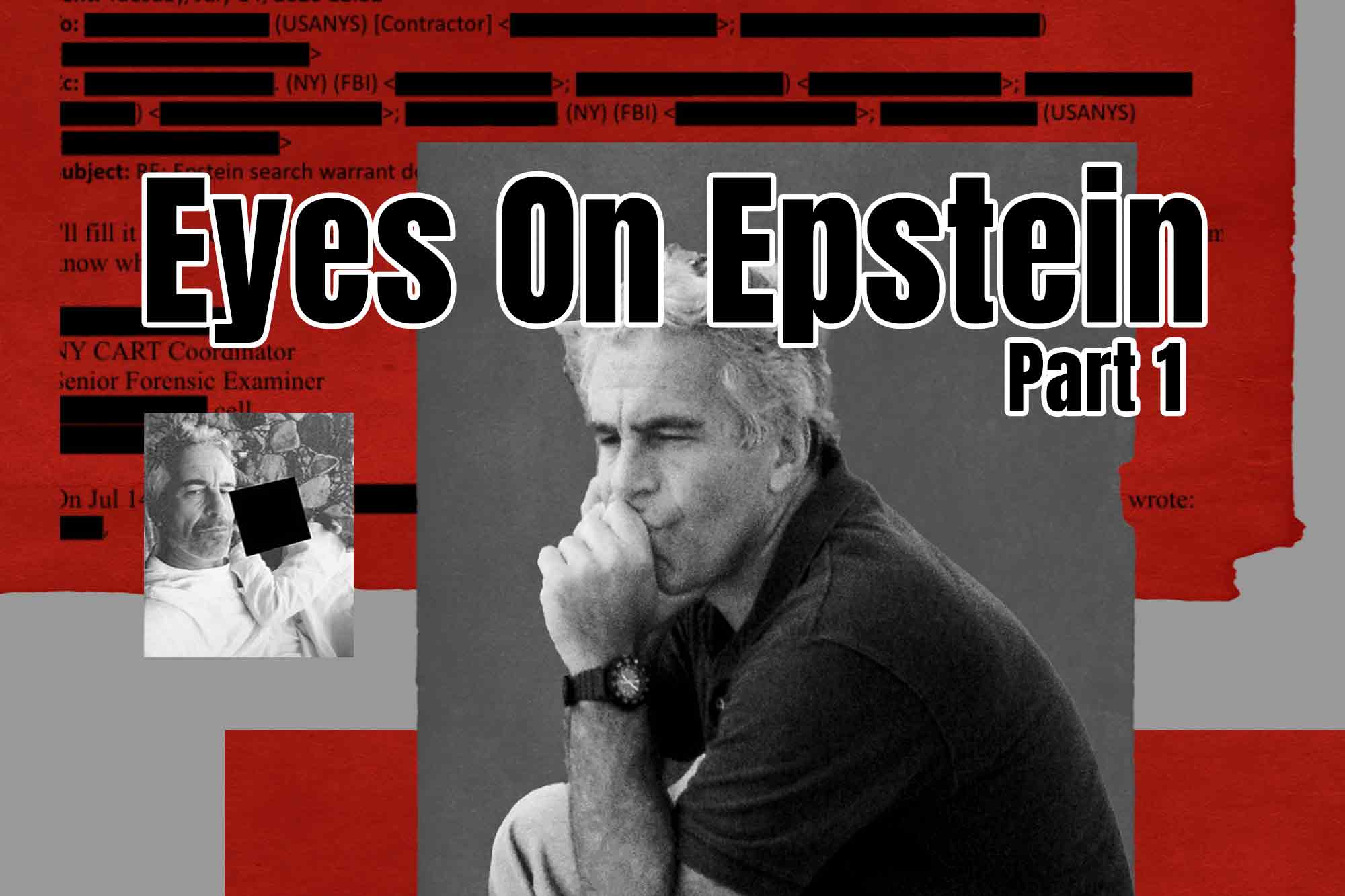 MARCH 14 / MY PUBLIC REPORTING
 JUNE 2 / FOLLOWING THE WITNESSES
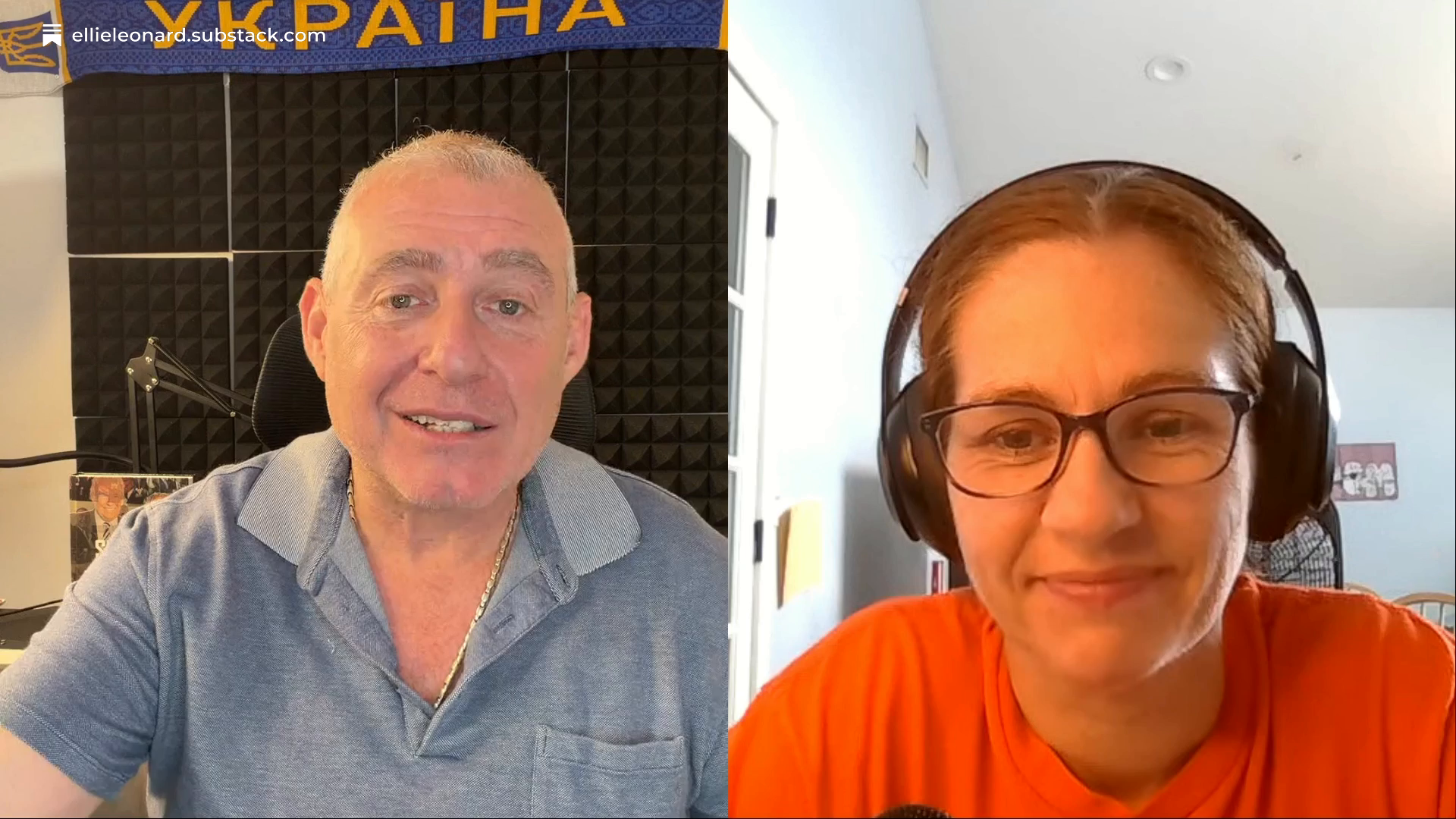 JUNE 29 / PUBLIC BROADCAST
I am not presenting an edited excerpt or attributing somebody else's words to an official decision. The full broadcast remains in its original context.
Open the complete original ↗Optional device-generated narration of the seven chapters. This is not my recorded voice or confidential source audio.
Select a chapter.I have already published the underlying stories about survivors, court records, institutional failures and my own work. I am not reproducing those investigations here. These three specific chronologies add evidence of public relationship changes and disputed publication authority. They establish what was published, not every private reason behind it.
On November 12, 2025, Ellie Leonard wrote favorably about interviewing Maria Farmer and receiving source material. On June 30, 2026, a Farmer-signed public post criticized Leonard and her reporting.
The change in public positions is documented, but I cannot reconstruct the private cause or decide whether allegations in the later statement are true from those two publications alone.
Confirmed: contrasting dated public accounts · Not established: private motive
A May 2020 original report identifies Kirby Sommers as organizer of a petition supportive of Farmer. The same publisher's February 2021 update records Sommers withdrawing the petition and includes the academy's response. In June 2022, Sommers published her account of the breakdown.
The public reversal is supported by dated publications. Her account of disputed private instructions still requires the original correspondence before the cause can be established independently.
Confirmed: petition and withdrawal · Open: private authorization
An April 2020 podcast listing described consent for excerpts of a call involving Farmer. Webb's later full-call release acknowledged that the original call had not been arranged as a public interview. Farmer subsequently disputed publication of the longer recording in a publicly released complaint.
The recorded sequence supports an unresolved permission question. The original complete consent exchange and a finding of misconduct have not been independently obtained.
Confirmed: different publication claims · Open: complete consent terms
Survivor credibility disputes, Rina Oh's litigation and published financing questions belong in the article about Molly Skye Brown, Rina Oh and George Bing Tonks. South Florida institutions and official decisions belong in the existing regional Atlas. Farmer's 1996 warning belongs in the previously published original report. This first-person Atlas remains the home for source relationships and custody.
New evidence will be added to the original investigation it changes. A correction, agency response or authenticated missing document is a meaningful update; another name for the same reporting is not.
Each original publication or court decision is linked and its limitation is displayed. The previously released source audio is public; other source-only identifying material is not mirrored here.
Playable source recordings are publicly available in the original audio archive ↗, including the May 31 complete session. Some separate unredacted screen recordings and sensitive identities still require controlled handling.
Released recordings are linked or played from their original publisher. Any additionally unreleased version with sensitive personal identifiers still needs a case-specific source and redaction review.
An office replying does not establish the complaint's merits or an ultimate agency disposition.
Publication requires an individual source, authentication, informed permission and responsible redaction.
Permission to receive or retain source material differs from authority to republish it.
Publication requires an individual source, authentication, informed permission and responsible redaction.